Integrating 4 Black Hearts Seamless Patterns into Your Digital Design Workflow
In the realm of digital content creation, consistency and aesthetic cohesion are not merely decorative choices; they are foundational elements of professional presentation. Whether you are a small business owner crafting social media assets, an educator designing classroom materials, or a freelancer building a brand identity, the background layer often dictates the visual tone of the entire project. This is where high-quality, seamless patterns become indispensable tools in your asset library. Specifically, integrating 4 Black Hearts Seamless Patterns offers a distinct, elegant solution for designers seeking to add depth and thematic unity to their work without overwhelming the primary content.
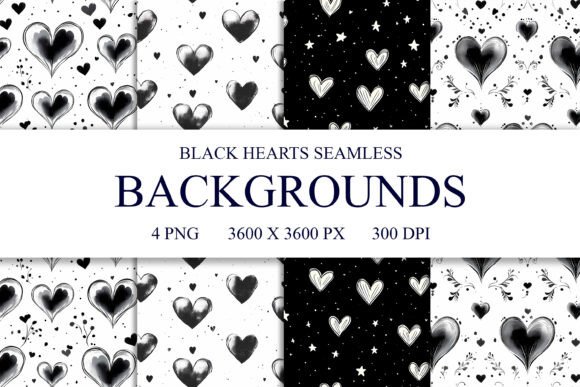
This digital download provides four unique background designs, each rendered at a high-resolution 300 DPI with dimensions of 12 x 12 inches (3600 x 3600 pixels). These specifications ensure that the files are versatile enough for both screen-based projects and high-quality print outputs. Understanding how to effectively utilize these assets requires a shift from viewing them as simple images to treating them as modular components of a larger creative workflow. By examining how these patterns fit into pre-production planning, active design execution, and final quality control, creators can maximize the value of this resource.
Understanding the Asset: Specifications and Technical Foundations
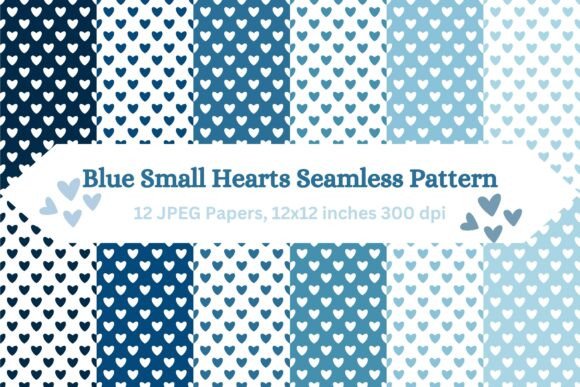
Before diving into application, it is crucial to understand the technical nature of what you are receiving. The package includes four PNG files featuring black heart motifs arranged in seamless tiles. A seamless pattern is designed to repeat infinitely without visible seams, making it ideal for backgrounds that need to cover large areas, such as website headers, scrapbook pages, or fabric prints. The choice of PNG format is strategic, as it supports transparency, allowing these patterns to overlay other elements cleanly while maintaining sharp edges.
The resolution of 3600 x 3600 pixels at 300 DPI places these files well above the standard requirement for most digital displays and many print applications. For context, standard web images often operate at 72 DPI, which is sufficient for screens but results in pixelation when printed. By starting with a 300 DPI source, you future-proof your assets. This means a designer can use the same file for an Instagram post and then scale it up for a physical greeting card or brochure without losing clarity. However, this high resolution also means the files require adequate storage and processing power, so organizing these assets in a dedicated folder structure within your design software is a recommended first step.
Pre-Production: Planning and Theme Selection
Effective design begins long before the canvas is opened. It starts with conceptual planning and theme selection. The "Black Hearts" motif carries specific connotations—elegance, romance, gothic aesthetics, modern minimalism, or even edgy sophistication. When preparing for a project, consider the emotional resonance of these patterns. Are you creating a Valentine’s Day marketing campaign? A wedding invitation suite? Or perhaps a dark-themed blog layout?
At this stage, evaluate the four available patterns against your project goals. Do you need a subtle texture that recedes into the background, or a bold statement piece that draws the eye? Because the patterns are seamless, they offer flexibility in scaling. You might choose one pattern for a full-page background and another for a border element. This decision-making process should happen early, allowing you to gather all necessary complementary assets, such as fonts, icons, and photography, that align with the chosen heart pattern. This proactive approach prevents mid-project pivots and ensures a cohesive visual narrative from start to finish.
Integration into Active Workflows
Once the plan is set, the actual integration of the 4 Black Hearts Seamless Patterns into your design software becomes the focal point. Most graphic design platforms, including Adobe Photoshop, Illustrator, Canva, and Affinity Designer, allow users to import custom patterns or use high-resolution images as background layers. Here is how to implement them efficiently:
- Layer Management: Always place the pattern on a separate layer below your text and main graphics. This allows you to adjust opacity, blend modes, or apply filters to the background without affecting the foreground content. For instance, reducing the opacity of a black heart pattern can create a watermark effect that adds texture without compromising readability.
- Blending Modes: Experiment with blending modes such as "Multiply," "Overlay," or "Soft Light." These modes interact with the colors beneath them, potentially altering the perceived darkness of the black hearts. This is particularly useful if you are placing the pattern over a colored base rather than white, ensuring the hearts remain visible and stylish.
- Scaling and Tiling: While the files are seamless, you may need to adjust the scale to fit specific layouts. In vector-based programs, you can scale infinitely without quality loss. In raster programs like Photoshop, be cautious of upscaling beyond the original 3600x3600 pixels, as this may introduce softness. If you need a larger area, consider tiling the pattern multiple times using the software’s pattern stamp tool.
For educators and bloggers, these patterns can serve as consistent branding elements. Imagine a series of downloadable worksheets or blog header images all sharing the same subtle heart pattern. This repetition builds brand recognition and makes your content instantly identifiable to your audience. Similarly, entrepreneurs selling digital planners or journals can use these backgrounds to create mockups that look professional and polished, increasing the perceived value of their products.
Post-Production and Quality Control
After the design is complete, the final phase involves quality control and export. One critical factor to keep in mind is color fidelity. As noted in the product description, colors may vary from screen to screen and printer to printer. This is due to differences in monitor calibration, color profiles (sRGB vs. CMYK), and ink types used by printers. To mitigate discrepancies, always preview your designs on multiple devices if possible. For print projects, convert your final document to CMYK color mode and perform a proof print if accuracy is paramount.
When exporting, consider the intended use case. For web use, optimize the file size using tools like TinyPNG or built-in export features in design software to ensure fast loading times without sacrificing too much quality. For print, save as a high-quality PDF or TIFF to preserve the 300 DPI integrity. Additionally, keep the original PNG files archived in a secure location. Since these are digital downloads, there is no physical replacement if the file is lost. Organizing them with clear labels (e.g., "Black_Hearts_Pattern_1_HighRes.png") ensures easy retrieval for future projects.
Long-Term Value and Versatility
The true value of assets like 4 Black Hearts Seamless Patterns lies in their longevity and versatility. Unlike trend-specific graphics that may feel dated in a few months, classic motifs like hearts tend to remain relevant across seasons and years. This makes them excellent additions to a permanent creative toolkit. You might use them today for a holiday sale banner and repurpose them next year for a personal project or a client’s anniversary design.
Furthermore, these patterns encourage experimentation. They can be combined with other textures, overlaid with gradients, or used as clipping masks for photos. This flexibility allows creators to push the boundaries of their design capabilities, turning simple background tiles into complex visual compositions. For freelancers and agencies, having a diverse range of high-quality, ready-to-use backgrounds reduces production time, allowing more focus on strategy and client communication.
Conclusion: Enhancing Creativity Through Preparation
Incorporating 4 Black Hearts Seamless Patterns into your workflow is more than just adding a pretty background; it is about embracing a structured approach to visual storytelling. By understanding the technical specifications, planning ahead, integrating assets thoughtfully, and maintaining rigorous quality control, you can elevate your projects from ordinary to exceptional. Remember that while the digital nature of these files offers convenience, it also demands responsibility in terms of organization and proper usage. Happy creating, and thank you for visiting. Use these resources to build designs that are not only visually appealing but also functionally robust and professionally executed.