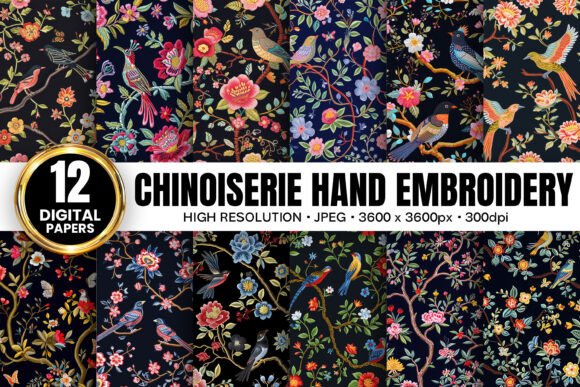
Black Chinoiserie Embroidery Patterns: Integrating High-Contrast Digital Assets into Creative Workflows
In the landscape of digital design and physical crafting, few aesthetic styles offer the same striking balance of elegance and boldness as black chinoiserie. This style, characterized by intricate motifs such as peonies, bamboo, cranes, and stylized landscapes rendered in high-contrast monochrome, has moved beyond traditional textiles into a versatile asset class for modern creators. For professionals ranging from small business owners to hobbyist scrapbookers, integrating Black Chinoiserie Embroidery Patterns requires more than just downloading a file; it demands an understanding of resolution, licensing, and practical application across diverse media.
The specific collection described here—comprising 12 high-resolution seamless patterns—represents a curated resource designed for efficiency. By providing assets at 300 DPI in JPG format, this package addresses the primary pain point of digital crafters: the need for crisp, scalable graphics that do not pixelate when scaled up for large-format prints or down for detailed card designs. Understanding how to leverage these specific technical specifications can streamline your creative workflow, reduce post-production editing time, and ensure professional-grade outcomes in both digital and physical projects.
Technical Specifications and Quality Control
Before diving into application, it is crucial to understand the foundation of the asset. The provided files are delivered in a single ZIP archive, containing 12 distinct digital papers. Each file is saved in JPG format with dimensions of 3600 x 3600 pixels, which equates to a physical size of 12″ x 12″ at 300 DPI. This standard is significant for several reasons related to quality control and output consistency.
Resolution and Print Fidelity: The 300 DPI (dots per inch) standard is the industry benchmark for high-quality printing. Whether you are designing a greeting card that will be printed on glossy stock or creating a wallpaper for a high-density display, starting with a 3600-pixel-wide image ensures that the fine details of the embroidery-like textures remain sharp. Lower resolution assets often require upscaling through software, which can introduce artifacts and blur the intricate lines characteristic of chinoiserie designs. By using pre-rendered 300 DPI files, you bypass this step, preserving the integrity of the original design.
Seamless Tiling Capabilities: The term "seamless" indicates that the pattern repeats without visible breaks. This is essential for applications where the design needs to cover a larger area than the source file, such as wrapping paper, fabric swatches, or full-page backgrounds. When preparing these files for use in layout software like Adobe Illustrator, InDesign, or even Canva, ensuring that the tiling aligns correctly is vital. Most modern design platforms handle seamless JPGs automatically, but verifying the edge alignment before final export is a best practice to avoid unintended gaps or overlaps in your final product.
Strategic Integration into Business and Creative Workflows
The versatility of these black and white patterns allows them to fit into various stages of a project lifecycle. For entrepreneurs and marketers, these assets serve as foundational elements for brand identity and customer engagement materials. For educators and content creators, they provide visually engaging backdrops that command attention without overwhelming text.
Product Design and E-Commerce Preparation
For small business owners selling physical goods, such as custom apparel, tumblers, or home decor, these digital papers are integral to the production pipeline. The high contrast of black chinoiserie on a white background (or vice versa) translates exceptionally well to sublimation printing and vinyl cutting.
- Custom Apparel Prints: When designing t-shirts or tote bags, the bold lines of the embroidery patterns stand out clearly against fabric textures. Ensure that your printer uses a color profile that maintains the deep blacks, preventing them from appearing grayish due to ink absorption issues.
- Tumbler Wraps: The seamless nature of the files makes them ideal for cylindrical wraps. Because the pattern repeats, you can create a continuous design around a standard 20oz or 30oz tumbler without worrying about awkward seams interrupting the visual flow.
- Textile and Fabric Design: While the files are digital, they can be sent directly to print-on-demand textile services. The 12″ x 12″ resolution is sufficient for many fabric repeat requirements, though it is always advisable to check the specific minimum DPI requirements of your chosen manufacturer.
Stationery and Paper Goods Production
In the stationery market, consistency and professionalism are key. These patterns are perfectly suited for creating cohesive product lines.
- Greeting Cards and Invitations: Use the patterns as full-page backgrounds. To maintain readability, consider overlaying a semi-transparent white or black box behind text elements. This technique preserves the elegance of the chinoiserie motif while ensuring that event details or messages are legible.
- Planners and Journals: Junk journal enthusiasts and planner designers often seek unique textures. These embroidery-inspired patterns add depth to digital planners or can be printed for physical binding. The repetitive nature of the design works well for page borders, headers, and footers, creating a unified look across dozens of pages.
- Book Covers: For self-publishing authors, especially those in genres like historical fiction, romance, or gothic literature, these covers offer a sophisticated aesthetic. The high resolution ensures that the spine and back cover details remain crisp even when viewed at small thumbnail sizes on e-commerce platforms.
Implementation Tips for Creators and Hobbyists
Integrating these assets smoothly into your routine requires a few practical considerations regarding file management, color accuracy, and tool compatibility.
File Organization and Management
Upon downloading the ZIP file, immediate organization is recommended. Create a dedicated folder structure within your project directory, such as /Assets/Patterns/Chinoiserie_Black. Label each of the 12 files descriptively (e.g., Pattern_01_Peony.jpg, Pattern_02_Bamboo.jpg) rather than relying on default names like IMG_001.jpg. This practice saves significant time during the selection phase of a project, allowing you to quickly locate the specific motif required for a given task.
Color Management and Monitor Calibration
A critical factor in achieving consistent results is acknowledging that actual colors may vary slightly due to monitor settings and printer capabilities. Black chinoiserie relies heavily on the purity of the black tone.
- Digital Displays: On screens, pure black (#000000) provides maximum contrast. However, if your design includes subtle grays or off-whites, ensure your monitor is calibrated to sRGB standards to prevent oversaturation.
- Physical Printing: When printing, the interaction between ink and paper matters. On uncoated paper, black may appear softer or bleed slightly. On glossy or matte coated paper, the crispness of the 300 DPI file will shine. Always order a test print before committing to a large batch of products, such as wedding invitations or bulk gift wrap, to verify that the tonal range meets your expectations.
Software Compatibility
These JPG files are universally compatible with almost all design software, including Adobe Photoshop, Illustrator, Affinity Designer, Procreate, and free alternatives like GIMP or Canva. This broad compatibility reduces barriers to entry, allowing users with varying levels of technical expertise to utilize the assets effectively.
- Vector Conversion: If you need to scale the pattern infinitely without any loss of quality, you may choose to trace the JPG in Adobe Illustrator using the Image Trace feature. This converts the raster image into vector paths, offering greater flexibility for logo design or signage.
- Layering Techniques: In photo editing software, use blend modes like Multiply or Overlay to integrate the black patterns over textured backgrounds, such as linen or wood grain, adding another layer of depth to your designs.
Long-Term Value and Ethical Considerations
As a digital product, these patterns offer long-term value without inventory costs. Once downloaded, the files can be used repeatedly across multiple projects. However, it is important to respect the terms of use associated with digital assets. Typically, these licenses allow for personal use and commercial use of finished physical products (like printed cards or shirts), but they usually prohibit the direct resale of the digital files themselves as standalone assets.
By adhering to these guidelines, you protect your business reputation and support the ecosystem of digital creators. The efficiency gained from having a pre-made, high-quality library of Black Chinoiserie Embroidery Patterns allows you to focus on the creative strategy and client communication aspects of your work, rather than spending hours generating basic graphic elements from scratch.
Conclusion
The integration of Black Chinoiserie Embroidery Patterns into your creative workflow offers a blend of aesthetic sophistication and technical reliability. With 12 high-resolution, seamlessly tiling designs available in a convenient ZIP package, creators have a robust toolkit for enhancing everything from e-commerce product listings to handmade crafts. By paying attention to resolution standards, color management, and proper file organization, you can ensure that these assets deliver consistent, professional results across all your projects. Whether you are designing a luxury invitation suite or a trendy line of tumbler wraps, these patterns provide a timeless visual language that resonates with audiences seeking elegance and detail.